Saturday, February 11, 2012

Red Monochrome Shaped Coif

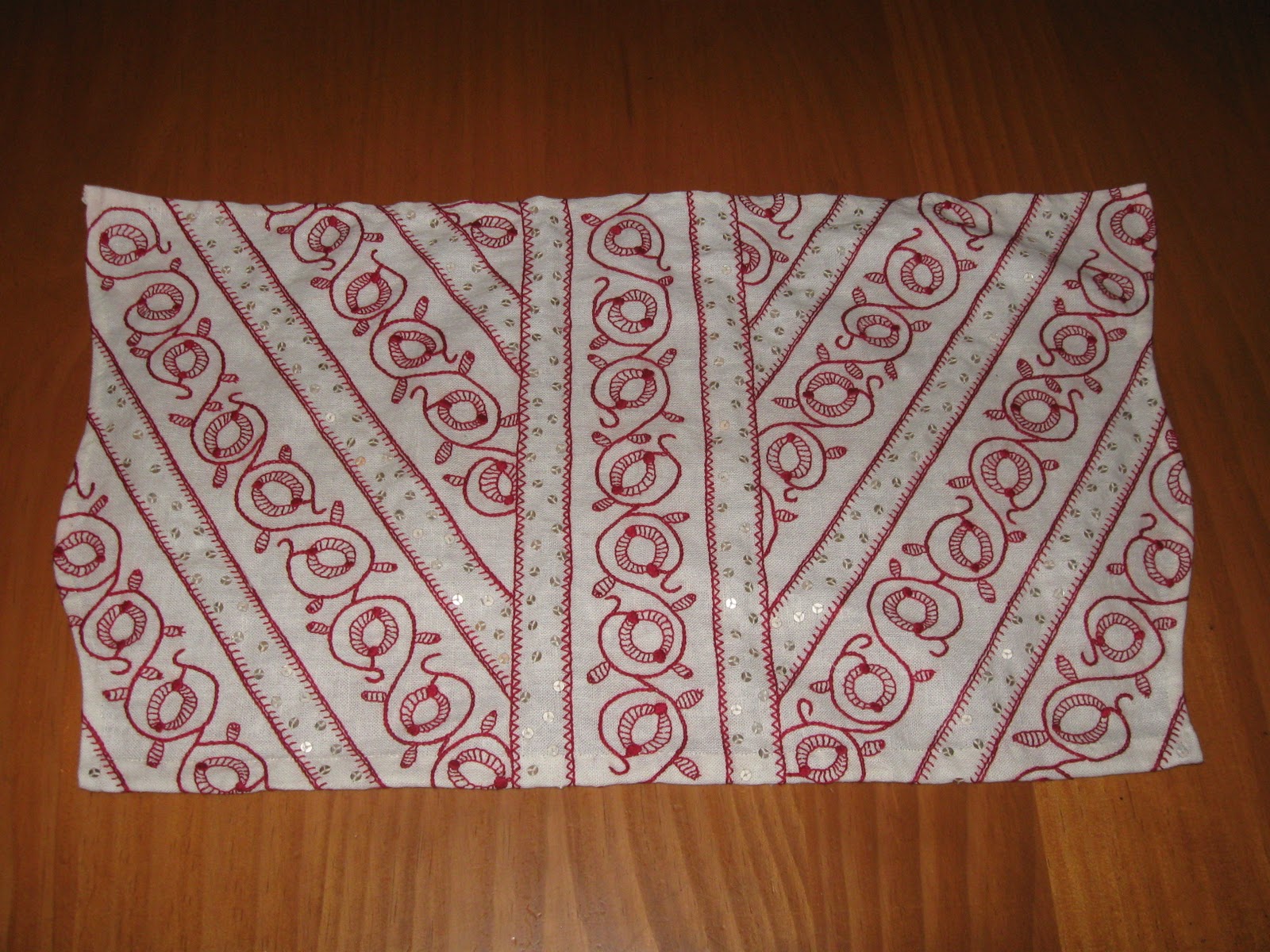
Today's picture is another shaped coif, this time with a red monochrome design. The base fabric is a cotton/linen blend, and the design was worked in stem stitch in DMC cotton floss. The design is one of my favourites, and one that crops up again and again in sixteenth century pattern books, including Modelbuch Aller Art.


I worked a simple needle lace around the front edge of the coif. Thankyou to Heather for the hand made lucet cords.


My previous post on my Elizabethan red striped coif has much more information about Elizabethan coif use, decoration and construction. 

Friday, February 10, 2012

Blue vine shaped coif


Today's picture is of one of my very early attempts at a coif. It is a shaped coif (rather than gathered) and is made of a base fabric of cotton. It is embroidered with a simple design in DMC floss. The design is worked in stem stitch, and there is a line of running stitch through the lace.

I adapted the design from several similar designs in Modelbuch Aller Art. It is hand sewn with purchased cotton bobbin lace around the face area. Lucet cord ties were hand made by Heather. I have found shaped coifs to be very comfortable to wear over short hair that can't be hair taped.


Thursday, February 9, 2012

Bones of the Dead Subtletie


Here is a subtletie and associated documentation that I made for a feast that my Barony held in 2011. 

An Ossi dei Morti (Bones of the Dead) Subtletie


Subtleties (or sotleties) were highly ornamental table decorations used at feasts in the Middle Ages and Renaissance. They were often made of confectionery or pastry, and served to amuse guests and display the wealth and stature of the host. Some subtleties were not made to be eaten and contained dangerous ingredients such as mercury or lead; others were made of edible materials so that guests could enjoy eating the showpiece after enjoying looking at it.


I prefer to create subtleties out of safe and edible materials so that the populace can enjoy eating the creation. This subtletie is made from marzipan and sugarplate and is inspired by accounts of feasts with death themes from Roman times to the Renaissance.


Feasts with Dark Themes

The Roman Emperor Domitian was celebrated for his bloodthirsty reputation and known for his changeable nature and dangerous whims. Records indicate that Domitian held a Death-themed Feast to celebrate the soldiers who had died in a recent conflict. [‘Charlemagne’s Tablecloth’ p. 87.] The guests were served in a room draped with black fabric and lit by tomb-lamps. Gravestones were put beside each diner, and they ate black funeral foods while being entertained by boys made up to look like ghosts.

An account of an Italian Carnival Masquerade held during the lifetime of Piero di Cosimo reflects similar themes of death and darkness. A description in ‘Charlemagne’s Tablecloth’ (p. 88) describes it thus: 
               a masquerade which, 'through it's novelty and terror...filled the whole city with fear and marvel
together...for even as in the matter of food bitter things sometimes give marvellous delight to the human palate, so do horrible things in such pastimes, if only they be carried out with judgement and art.' Carnival hell-banquets were served in classical settings of a black-draped Hades, with devils offering food on fire-shovels and screaming wretches providing off-stage sound effects. The food and wine
   was exquisite, though, even allowing for its repulsive presentation: containers made to look like toads, scorpions, spiders and lizards revealed delicious creations made out of larks and thrushes”.  


My main inspiration for this subtletie was the account of noble banker Lorenzo Strozzi hosting a ‘Black Feast’ or ‘Feast Macabre’ at his house in Rome. During the 1519 Carnival, Strozzi invited three courtesans, two buffoons, four Cardinals and a number of noblemen to his house, and they were ushered into a dimly lighted room hung with skeletons. The table in the centre of the room was covered with a black cloth and had a ‘death’s head’ as a centerpiece, which contained roasted pheasants. In the adjoining dining room, the guests sat at an empty table and food appeared mysteriously from below. Diners were served a centerpiece of “bones” made out of sausage, and confections featuring “bones of the dead” made out of marzipan. Next, spectral forms appeared in the room. Apparently these surprises frightened the Cardinals so much that they left the feast, their appetites gone.
 It is interesting to note that none of the accounts of this feast that I have found refer to the reason that Strozzi decided to hold such a feast. We can only speculate as  to whether he was making a comment on the decadence of Roman high society, remembering a dead friend, reminding his guests that death is always near, trying to cause a sensation, or (as one modern writer has suggested,) because he had no other way of distinguishing himself “except by his grotesqueness”. [‘History of the Papacy’]

Guendalina Mahler [‘Heavenly Banquets and Infernal Feasts in Renaissance Italy] contrasts dark feasts such as this, with others with more angelic themes. She notes that the “Feast(s) of Heaven, marks a high point in the intellectual aspirations of the genre. It was a remarkably ambitious, if somewhat pedantic, attempt to sublimate the dinner party into an exercise in high culture. The second, a feast served in Hell, played on the appeal of the sublime. Held in a sophisticated courtly setting, it flirted subversively with the tradition’s rag-tag cousin: the popular carnivalesque. These banquets were high-stakes political events which spoke in the language of high art.”

Construction

I originally had planned to reproduce the Death’s Head from Lorenzo Strozzi’s 1519 Black Feast out of sugarplate and put marzipan bones inside, but I realised that such a structure would probably be difficult to transport safely. Instead, I decided to make skulls and crossbones out of sugarplate, and long bones out of marzipan. I used two types of sweets because I would like diners to be able to enjoy eating the subtletie, and many people do not like marzipan.
Both the sugarplate paste and the marzipan were modeled by hand. The sugarplate was painted with commercially available black food dye and rosewater. In period, dyes were made from fruit and vegetable juices, soot or charred materials, and sometimes real metals such as gold leaf and lead powder. I chose to use a modern dye over a period recipe using soot to make the end result more palatable and appropriate to modern notions of taste and safety.

I used lemon juice, gum tragacanth, water and rosewater with powdered sugar to make my sugarplate. I omit egg white from my recipes, even though it was often used in period for strengthening confectionery pastes, due to concerns over the remote possibility of salmonella poisoning. I used extra gum tragacanth in my mixture to make the paste more crumbly so that it would crack and craze slightly to make the skulls look more realistic. I am fortunate in being able to purchase pre-ground icing sugar, as in period it was ground by hand and was a laborious process.

I used commercially available marzipan for this project as it is extremely difficult to get almond meal to grind fine enough to make good quality paste. In the past, I have tried to grind my almond meal fine enough to match period accounts of ‘fine almond meal’ and have ended up with nut butter! Modern palates expect marzipan to be very fine and not grainy. I am not sure whether the consistency problems I have had in the past relate to the type of almonds I have been using or the kitchen equipment, or both.

There are a large number of cookbooks still available from our time period, and the plethora of recipes relating to confectionery prove that Renaissance people were just as fond of sweets as modern people. Some examples are listed below.

An example of a marzipan recipe fromValoise Armstrong's translation of Das Kuchbuch der Sabina Welserin

In the name of the Holy Trinity I, Sabina Welserin, begin this cookbook. God grant me His holy grace and wisdom and understanding and judgment with which I through His Holy will live here in this time and with Him forever. Amen. anno 1553

22 If you would make good marzipan - First take a half pound of almonds and soak them overnight in cold well water, take them out in the morning. Next pound them well until they become oily, pour a little rose water on them and pound them further. When they become oily again, then pour a little more rose water thereon. Do this until they no longer become oily. And pound the almonds as small as possible. After that take a half pound of sugar, pound not quite all of it in, leaving a little left over. Next, when the almonds and sugar are pounded well together, put them in a bowl, take the lid from a small box, loosen the rim completely, so that it can be detached and put back on again, however leave the lid and the rim together. Take wafers and make them about as wide as a pastry shell, very round. Spread the almond paste described above with the fingers onto the wafers, moistening the fingers with rose water and dipping the almond paste into the sugar, which you have kept in reserve. After that, when you have spread it out evenly with your hands, take the sugar that you have reserved and sprinkle it through a sieve evenly over the marzipan. And take a small brush and dip it in rose water and sprinkle the marzipan overall, so that the sugar is dissolved. Then let it bake. Check it often, so that it is not burnt. It should be entirely white. The amount of a half pound is necessary, so that the oil remains.

The following recipe for a marzipan tart was taken from ‘The Medieval Kitchen Recipes From France and Italy.’

“Marzipan. Skin the almonds very well and pound them as finely as possible, because they will not be put through a sieve. Note that to make the almonds whiter, more flavourful, and sweeter in the mouth, they should be put to soak in fresh water for a day and a night, or even longer, so that they can be skinned by pressing between your fingers. When you pound them, dampen them with a little rose water so that they do not become oily. And if you want to make this torta good, use equal weights of sugar and almonds, that is, one libra of one and the other, or more or less as you prefer; and also use one or two oncie of good rose water; and mix all these things together thoroughly. Then take cialdonui or nevole made with sugar and first moistened with rose water; arrange them on the bottom of the pan…….”
A recipe for Ymages In Sugar from ‘Early French Cookery’:

“And if ye will make any ymages or any other thing in suger that is casten  in moldys, seethe them in the same manere that the plate is, and poure it  into the mouldes in the same manere that the plate is pouryde, but loketh  youre mold be anoyntyd before with a littell oil of almaundes.”

Sugar Paste recipe in the ‘Good Hus-wives Jewell’ of 1596:

“To make a paste of Suger, whereof a man may make all manner of fruits  and other fine things with their forme, as Plates, Dishes, Cuppes and such like things, wherewith you may furnish a Table.”
“Take Gumme and dragant as much as you will, and steep it in Rosewater til it be mollified, and for foure ounces of suger take of it the bigness of a beane, the juyce of a Lemon, a walnut shel ful, and a littke of the white of an eg. But you must first take the gumme, and beat it si much with a pestell in a brazen morter, till it be come like water, then put it to the iuce with the white of an egge, incorporating al these wel together, this done take four ounces of fine white suger wel beaten to a powder, and cast it into the morter by a little and a little, until they be turned into the form of paste, then take it out of the said morter, and bray it upon the powder of suger, as it were meale of flower, until it be like soft paste, to the end you may turn it, and fashion it which way you wil. When you have brought your paste to this fourme spread it abroad upon great or small leaves as you shal thinke it good ans so shal you form or make what things you wil, as is aforesaid, with such fine knacks as may serve a Table taking heede there stand no hotte thing nigh it. At the end of the Banket they may eat all, and breake the Platters, Dishes, Glasses, Cuppes and all other things for this paste is very delicate and saverous.”


References


Barber, A. 1973, Cooking and Recipes from Rome to the RenaissanceAllen LaneLondon.

Creighton, Mandell, 2010. A History of the Papacy from the Great Schism to the Sack of Rome, Nabu Press.

Dawson, T. 1596, The Good Hus-wife’s Jewell

Eleanor Scully D. and Scully, T. 1995, Early French CookeryUniversity of Michigan Press, Michigan.

Fletcher, Nichola, 2005 Charlemagne's Tablecloth, St Martin’s PressUK.

Mahler, Guendalina, 2007. Heavenly Banquets and Infernal  Feasts in Renaissance Italy, Brepols Publishers

May, R. 1685, The Accomplisht Cook, Prospect Books 1994 Reprint, London.

Redon O, Sabban F. and Serventi, S. 1998, The Medieval Kitchen - Recipes From France and ItalyUniversity of Chicago Press, Chicago.


Redon O, Sabban F. and Serventi, S. 1998, The Medieval Kitchen - Recipes From France and ItalyUniversity of Chicago Press, Chicago.


Further Reading:

Ajmar-Wollheim, Marta, and Flora Dennis. At Home in Renaissance Italy. V&A Publications, London: 2006. ISBN: 1-85177-489-0.

Barber, A. 1973, Cooking and Recipes from Rome to the RenaissanceAllen LaneLondon.
Black, Christopher F. Italian Confraternities in the Sixteenth CenturyCambridge University Press, New York: 2003. ISBN: 0-521-53113-6.
Black, Maggie. The Medieval Cookbook. Thames and HudsonNew York: 1992. ISBN: 0-500-01548-11230.1
Burke, Peter. The Italian Renaissance: Culture and Society in ItalyPrinceton University Press, New Jersey: 1999. ISBN: 9780691006789.
Castiglione, Baldassare. The Book of the Courtier. Originally printed, 1528. Trans. by Leonard Eckstein Opdycke. Charles Scribner's Sons, New York: 1903.
Cohen, Elizabeth and Thomas. Daily Life in Renaissance ItalyGreenwood Press, Westport CT: 2001. ISBN: 0-313-30426-2.
Currie, ElizabethInside the Renaissance House. V&A Publications, London: 2006. ISBN: 978-1-85177-490-6.
Florio, John. Queen Anna's New World of Words: or Dictionarie of the Italian and English tongues. Melch and Bradwood, London: 1611.  http://www.pbm.com/~lindahl/florio/.
Frugoni, Chiara. A Day in a Medieval CityUniversity of Chicago Press, Chicago: 1997. ISBN: 0-226-26635-4.
Platt, H. 1602, Delightes for Ladies

Scully, Terence. The Art of Cookery in the Middle Ages. Boydell Press, Rochester: 2005. ISBN: 0-85115-430-1.

Scully, T. 1997, The Vivendier, Devon: Prospect Books
Scully, Terence. The Neapolitan Recipe Collection: Cuoco NapoletanoUniversity of Michigan Press, Ann Arbor: 2000. ISBN: 0-472-10972-3.
Sider, Sandra. Handbook to Life in Renaissance EuropeOxford University Press: New York, 2005. ISBN: 978-0-19-533084-7.
Stinger, Charles. The Renaissance in RomeIndiana University Press, Bloomington IN: 1998. ISBN: 978-0-253-21208-5.

 Strong, R. 2002, A History of Grand Eating


Reading Carnival: The Creation of a Florentine Carnival Song

http://jps.library.utoronto.ca/index.php/qua/article/viewFile/10180/7119
Andrea Gareffi. La scrittura e la festa. Teatro, festa e letteratura nella Firenze
del Rinascimento. Bologna: Il Mulino, 1991. Pp. 41 1.

http://jps.library.utoronto.ca/index.php/qua/article/viewFile/10180/7119
Andrea Gareffi. La scrittura e la festa. Teatro, festa e letteratura nella Firenze
del Rinascimento. Bologna: Il Mulino, 1991. Pp. 41 1.

Welserin, S 1553.  Das Kuchbuch der Sabina Welserin

goodecookery.com

www.shipbrook.com/artsci/education/ alcohol/cordials/CordialPaper.html


Short-sleeved Elizabethan Smock


Today's picture post is of a sleeve that I started last year. I saw the Helen Mirren portrayal of Elizabeth I and was transfixed by the opening scene where she gets undressed for her examination by the court physician. You may have noticed that her smock sleeves are relatively short and that she has sleeve ruffs attached to her outer sleeves. I thought this would be a great idea for use under my gowns with heavy outer sleeves, so I started a (relatively) short-sleeved smock. Here is a picture of the completed first sleeve:


The embroidery motifs are worked predominantly in double running stitch in maroon cotton floss on a cotton base fabric. These varied plant and animal motifs were very popular in Elizabethan times, when exciting new botanical and animal discoveries from the New World were fashionable subjects for embroidery and decoration. A shift decorated in a similar way from about the 1630's is in the collection at the V & A Museum (http://collections.vam.ac.uk/):


As you can see, I have used several of these motifs in part or whole. The rest of the designs I used were taken from contemporary Italian or English extant embroideries, except for some of the smaller insects which  were my own creation (but inspired by extant examples.)


Fans of 16th Century historical embroidery will probably recognise motifs from 'A Scholehouse for the Needle' as well as designs from some of the garments in Janet Arnold's 'Patterns of Fashion 4'.

From extant sixteenth century embroideries, it is evident that many embroiderers did not use knots on their work, preferring to weave the threads back into the back of the design. I wash my smocks and chemises in the washing machine, so I use knots and weave the thread ends in for greater durability.

Here you can see the back of the sleeve embroidery


The back of the chameleon

Many of my personal embroideries have the same motifs showing up in one form or another; most notably the heartsease (pansy/viola), strawberries and snails. I am now also a big fan of this chameleon, butterfly and  bird:


Although I wouldn't rule out using him again, I do find that owl kind of creepy!


I will reverse the design for the other sleeve. I probably will not decorate the whole body of the smock, but may add some designs in the upper torso area. 

Saturday, February 4, 2012

Embroidered book cover


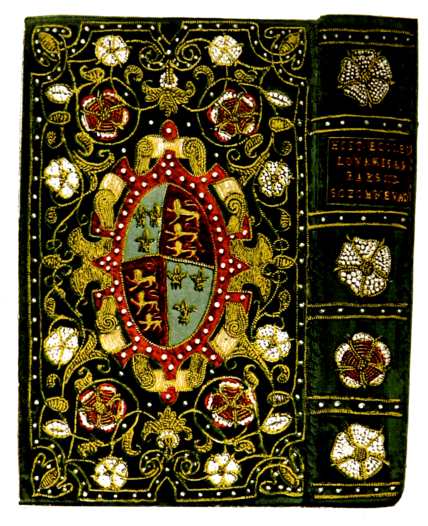
Today's pictures are from an embroidered book cover I made from blue silk. In the sixteenth century (and earlier) embroidered and decorated book covers were a status symbol and reflected the high value of the books they contained and protected. I recommend the following e-book for a drool-worthy read and source of inspiration:


Christopherson, Historia Ecclesiastica. Lovanii, 1569.
One of the beautiful examples of embroidered book covers from the site above


My piece was designed to be relatively simple because it was my first attempt at a book cover. I wasn't sure how the embroidery would stretch or sit. The design is a stylised Griffon in a wreath of leaves.
The piece when it was taken out of the frame

The main stitches used for the book cover were chain and split stitch. This project was completed in 2006; I honestly can't remember if the floss was silk or DMC cotton. The piece was for a gift, so I suspect I used silk.


The design was taken from a woodcut that I found online. I padded a notebook cover with a thin wadding and covered it with the silk.


Thursday, February 2, 2012

More subtleties


Here are some more subtletie pictures. All were made from sugarplate and were painted with edible colours and metallic dusting powders.


Wednesday, February 1, 2012

Some completed subtleties


I will be quite busy over the next week or so, so I will go back to posting pictures of items that are already completed. Here are some photos of sugar plate and marzipan subtleties that I have made.....

A sugar plate cat that was filled with marzipan fish

Subtleties or 'soltelties' were illusion foods designed to astonish and amuse guests. They were very popular at feasts and were a demonstration of wealth and prestige as well as a way of honouring guests. There are many accounts of amazing illusion foods being presented at feasts in the sixteenth century. I prefer to focus on sweet subtleties with components like sugar plate, marzipan, toffee and gingerbread.

Sugar plate for the Mongol Feast


A sugar plate flower


Putti plate surrounded by sugar strawberries and bay leaves

This one suffered a bit of damage and got cracked

Marzipan strawberries

The mystical SpiderPig, made from marzipan and sugar plate

One of my first subtleties - A 'silly bub' in syllabub for a Fool's Feast


And for the same feast, a fruit fool in a jester's hat of marzipan

Tuesday, January 31, 2012

Preparations


I am preparing to start the Realm of Venus mini-challenge tomorrow. In light of my health problems, I have probably bitten off more than I can chew, but I have enjoyed the preliminary research. I need a nice new coat for winter; I have a green Dutch coat made out of green recycled wool blanket, but it is quite itchy so I am keen to get something more comfortable.

The coat must be usable for both Elizabethan and Italian ensembles. Here are my main inspirations scanned  from Vecellio's Costume Book (Italian section):

Plate 190- 'Unmarried peasant woman of Tuscany' got added by mistake!


Hopefully I will be able to finish in time. I will post progress and pictures at the end.

Speckled Holly Leaf Coif


Today's post is on a coif that I started a really long time ago and only finished in about 2010. I had grown disenchanted with the project because the pattern was not cut in an accurate way. For a long time I debated about whether I should continue the embroidery or whether it was a waste of time to finish the garment if it was not accurate.


The finished coif

In the end, I modified the pattern to make it more accurate for the sixteenth century and decided to finish the garment. The piece was good practice in speckling stitch, which was popular with Elizabethan embroiderers for adding depth and texture to monochrome embroidery. I found it quite a tedious and time consuming stitch also, but I liked the end result.

Here you can see the original coif pattern modified to make it more accurate for a sixteenth century English style coif. Note the join down the middle of the garment. I have never seen an extant coif with a join, but that was the only way to modify this coif from it's original 'Jorvik hood' style shape into a more appropriate shape.

There are many examples of floreate patterns in extant English monchrome and ploychrome embroidery from the sixteenth century - the Elizabethans loved them! I particularly wanted a holly pattern and was inspired by patterns from 'A Scholehouse for the Needle' and the images below.


The spiky leaves from this Elizabethan man's nightcap in the V&A Museum (c1600-1629/Museum # 814-1891) reminded me of holly leaves  although I suspect they are supposed to be thistle leaves.

A really excellent collection of images of extant coifs can be found at the Blackwork Guild 'Blackwork Headwear' page - http://www.theblackworkguild.com/COSTUMES-MEMBERS%202.html


Stylised holly design in silk and gilt from a sixteenth century English coif in the V&A Museum collection

The finished coif worn by a model with very short hair. It does fit better over a bun or hair taping.


Spangles were attached with three stitches, and the centre seam was decorated with chain stitch. All the embroidery was done in DMC cotton thread with two strands of black. Cotton floss and fabric were used for this project instead of silk and linen to save money. The spangles are silver metal. 

Centre top seam decorated with chain stitch.


The centre top seam was decorated with chain stitch and the edges with a slanting whip stitch. In period, an Elizabethan braid stitch would most likely have been chosen for the top centre seam, but when I tried it, it just didn't fit with the embroidery. If I started this project again, I would make the embroidery design more crowded and full. When I drew this design out, I was less familiar with Elizabethan style than I am now, and I think I was looking at the design with a modern eye. It needs a lot more spangles and have less bare areas.

I gathered the central seam in an approximation of the same technique that I used on the Red Stripey Coif (posted previously). It doesn't look quite right due to the adjusted shape of the coif. The main embroidery stitches used were stem and speckling stitches, and a funny little knot I use in lieu of french knots. (It is close to a colonial knot.)

The finished coif is lined with a light cotton lining to protect the embroidery from hair oils etc. The lucet cords were hand made by Heather - thank you Heather! Also thanks to Alisondre who helped with some of the speckling stitches.

Friday, January 20, 2012

Orange-red Geometric Band Partlet


Today's post is a picture of one of my early monochrome embroidered partlets. It is embroidered in two strands of an orange-red DMC cotton floss. In period, silk would probably have been used. I used cotton fabric for the body of the garment, whereas in the sixteenth century linen was a much more commonly used fabric. Both these substitutions were made for financial reasons. The garment is hand sewn and was completed in early 2007.


Stitches include stem stitch, running stitch and an ornamental buttonhole stitch.

I rely very heavily on reprints of sixteenth century pattern books to source my embroidery designs and gain inspiration. This partlet embroidery design is a direct copy of a popular sixteenth century band design that crops up in several pattern books. 

Here is a book that I use very often  

Thursday, January 19, 2012

Mouse pouch


Here is a photo of the mouse pouch I made last year. I have three more in the 'to do' pile.

The pouch is made of red linen and lined with red linen. The mouse is made of appliqued wool felt and surrounded by white linen chain stitch. It doesn't show up properly, but the mouse has 3D whiskers. The eyelets are hand stitched, and the cords were luceted by Heather.


For those in the SCA in Lochac, the instructions can be found here - http://www.sca.org.au/broiderers/Docs/mouseguard_pouches_instructions.pdf

Red striped coif


Here are some more photos to go with the article on the red striped coif (below).


Here is the coif with completed embroidery but before spangles were added.


The back of the coif showing embroidery and spangling threads. I knot off my spangling threads after each spangle so that if a thread should break, I will not lose all the spangles.


Here is the coif all finished and ready to be made up. If I could do it over, I would add more gold metal spangles. This was one of my first spangling projects, and I completely under-estimated just how long that part of the project would take! I would also make the vine design fill the band more completely.


A close up shot of the edge of the coif before the decorative edge stitching was added.


The finished coif and the view from the inside so that the underside of the embroidery can be examined.


Article on Red Striped Coif


This is an article that I wrote to accompany a coif I made in 2009.


Background
After cutting my waist-length hair short in November 2008, I realised that I needed to reassess my hair coverings for SCA events. I normally wear sixteenth century Italian and Elizabethan style clothing and I found that I didn’t have enough hair for my normal cauls to fit securely.
On Christmas Day 2008, I received my much hoped for copy of Janet Arnold’s Patterns of Fashion 4 (POF4) and subsequently spent many enjoyable hours poring over the detailed colour plates of extant items. I realised that an Elizabethan coif might be the solution to my headwear problem and decided to create one as much in keeping with period techniques as possible. Previously I have made several shaped coifs because I wanted to minimise bulk at the crown and back of the head. Having cut off my long, thick hair, bulk is no longer an issue, so I decided to make one with pleats at the back of the head.
Pattern, Materials and Techniques
Making the pattern for the garment was a case of trial and error. I played around with paper patterns in the approximate shape of the unjoined extant coifs reproduced below. There is some variety in the shape of extant coifs, probably due to personal preference on the part of the wearer. I don’t like having headwear obscure my peripheral vision, so the ear ‘flaps’ on my coif are quite small.
Having settled on the style of coif, choosing an embroidery design was the next challenge. I was very taken with the linen coif embroidered with red, green, black and ivory silks shown in POF4 on Plate 51, but took my main inspiration from Plate 50 (below).  The original has lines of flowing foliate stems and flowers worked in black silk, separated with enclosed areas of silver gilt spangles. I have never tried to completely reproduce an extant piece of embroidery, preferring instead to change small details to make a piece completely ‘my own’ and allow my own creativity to shine through.


The extant piece that first inspired me to make a coif; I loved the colours and may attempt something like this in the future. (Plate 51, POF4; Linen coif embroidered in silk from around 1600 from the Museum of Costume and Textiles, Nottingham.)


My embroidery design and layout is largely inspired by this extant coif (POF, Plate 50) in the Burrell Collection, Glasgow that dates from around 1610.

Although most of the examples I have used date from around 1600, coifs were in use at least a decade earlier than that. The picture by William Peake the Elder, 1590 (below) shows Lady Catherine Constable wearing a linen coif and forehead cloth (POF4, Plate 51A), and a variety of plates in ‘the Tudor Tailor’ show similar garments. Plate 6, A portrait of an Unknown Woman 1568 (p. 10) shows a lady wearing a distinctly coif like garment. Coifs could be worn under another item of headwear, or used to cover the hair on informal occasions, such as when inside the house.

For this project, I decided to change the design from flowers to pomegranates, keeping the original scheme of geometric lines separating the coif into segments. The pomegranate motifs from the Warwick Museum’s men’s shirt inspired this choice, although I altered the shape and style of the fruit somewhat.
I chose a red monochrome colour scheme rather than black because I have several red Elizabethan style garments in various stages of construction. Red monochrome embroidery was popular in both Italy and England in the sixteenth century, with many extant examples still in existence. Red-worked smocks, shirts, chemises and coifs from England and Italy are all shown in POF4 and can be found in most museums that have clothing collections. A variety of embroidery styles is shown on these garments, but geometric and freestyle monochrome and polychrome styles are both found. A lovely red worked Italian camicia from the sixteenth century can be found in Moda a Firenze on p. 124. It and the large number of Italian and English red-worked garments in POF4 indicate the trans-continental appeal of this colour combination.
I used cotton floss rather than silk purely due to financial restrictions, but I was really happy to find a piece of unbleached pure linen in a remnant basket, and I used this for the coif itself. (Extant coifs are worked on linen but I usually can’t afford linen.)


This late sixteenth century Chalice Veil (V&A Collection as shown in Geddes et al, p. 12) is worked in red silk. The embroiderer has edged the piece in a similar way to the edging on the ‘face’ edges of my coif. Stitches used here include stem stitch, double running stitch (‘Holbein stitch’) and braid stitch.


I used stem stitch and open buttonhole/blanket stitch for the majority of the embroidery. I wanted to practice my open buttonhole/blanket stitch on this project because I am not very confident with the technique or tensioning of this type of stitch. For this reason I changed the diagonal segment edging style of the original from little triangles to lines of open buttonhole/blanket stitch, although I did keep the little triangles in the two vertical centre segments because of their aesthetic appeal.


This linen panel, known as ‘the Shepheard Buss’, dates to around 1600. Worked in black silks, lines of what look like blanket stitch are used to separate the different sections of the design. I have used this technique in the sections of the coif containing spangles. (V&A Museum, Geddes et al, p. 42.)

I have not been able to find any really detailed pictures of the original coif, so had to make educated guesses about what type of stitches the original embroiderer used. Braid, chain, stem, back and double Holbein stitches are all commonly used in Elizabethan embroidery, so I used stem stitch for the dividing segment lines and the pomegranate stems, with blanket/open buttonhole stitch for the fruit segments and leaves, and satin stitch for the circular points at the top and bottom of the fruits. The decorative triangles in the centre vertical columns are done in large double running stitches, although I suspect that the original embroiderer would have used two stitches to my one, judging from the trouble I had with the tension.
I used silver-gilt spangles of 4.0mm diameter from the Thread Studio, which appear to be slightly smaller than those used on the extant garment. Although pressed metal spangles or ‘ooes’ were used in period, I am not sure what these modern alternatives are made of. I suspect that they are a metal alloy blend as they are light, don’t seem to tarnish, don’t snap and don’t melt under the iron.  I have seen examples of spangles being sewn on with four stitches (see below), but the majority of garments seem to have spangles stitched with three so I used three. The extant garment appears to have spangles sewn on with one thread, but I used a doubled cotton thread because it is likely that my coif will be machine washed, and durability is very important to me. I knotted off the thread after each spangle was secured, but did not cut the thread so the back of the work would be tidier.


A sixteenth century polychrome coif (Synge, unknown page) unusually showing spangles sewn with four stitches instead of three!

For the same reason, I have a natural cotton lawn lining waiting to be whip stitched in before I wear the garment. Although I can find very little evidence of coifs and similar headwear being lined in period, I have decided to line mine to reduce the chance of hair oils/products from soiling the linen. (I have left the lining off so that the back side of the stitching is visible.)
I have never made a coif where the embroidery goes right to the edge before; on my previous efforts the embroidery has always stopped within a centimetre or two from the edges. I don’t want to get too stuck in my ways, so decided that I would copy the designer from Plate 54 of POF4 and draw my designs all the way to the edges.


This coif from c. 1610 in the Burrell Collection (Plate 54, POF4) and this coif from c.1600 in the V&A Museum (p. 44, Geddes et al.) demonstrate the technique of taking the embroidery design all the way to edge of the garment. The V&A Coif at the right also shows (faded) small diagonal decorative stitches around the edges of the coif that frame the face.

Although ink was often used in period to mark out embroidery designs, I am not confident enough about my draftsmanship to risk using ink, so I traced the design in modern water soluble ink. I taped my sketched design to a window and used the pane as a natural light box. The salamander design below, dating from around 1600, demonstrates how ink was used to mark out designs for the embroiderer to follow (V&A Collection, T.88-1925, Arnold {QEWU} p. 272).


In period, many embroiderers seemed to avoid knots and work their thread ends back into the embroidery. I have knotted my threads and then worked the thread ends back into the work, again for durability and security when the garment is machine washed.


This red and gold worked coif from about 1610 shares similar attributes to mine; the colours are similar, the design goes all the way to the edges and no edging lace is used, small spangles are used, and the embroiderer seems to have anchored their stitches in places with knots. (POF4, plates 53-A.) Compare with a back view of my coif, below.


The edges of the garment were bound with natural cotton thread using a satin stitch before the garment was cut out with snips. I chose to use the snips because they were used in period, and I wanted to get a feel for the technique. I found them unwieldy, probably because I am used to modern scissors and because I was worried about making a mistake that would ruin the work. After the edges were cut, I hemmed them with natural cotton thread, and a casing was made along the lower edge for the lucet cord. The hand made cord was provided by my friend Heather Carter and was made on a wooden lucet. The side edges were ornamented with diagonal stitches. Of the coifs I have looked at, some were decorated on the edges, and some were not. Because I didn’t want to use lace on this coif, I chose to decorate the edges.
I joined the top seam with a small diagonal stitch in natural cotton, and then tried to replicate the cartridge pleats seen on the coif in Plate 52B of POF4. My pleat stitches must have been larger than those on the original because my coif has fewer pleats. Because of this, I managed to push the main part of the pleats down into the ‘hole’ created by the gathering to give a cleaner look to the area. When I copied the original in Plate 52 exactly, the result looked wrong, possibly because of the larger pleats. I secured the pleats with small stitches in natural cotton, then cut away the pleating guide stitches because they looked too big and a bit untidy. I then attempted to do the gathering cross just visible in pale green thread on Plate 52B (POF4). I used a triple securing stitch in embroidery floss, which I then buttonholed over for strength. I did the same on the smaller side arms. The extant piece seems to have a five armed knot, but the function is the same.


Plate 52B, POF4 shows a detailed picture of the top seam of a polychrome coif from around 1610, held in the Museum of Fine Arts in Boston.


Even though my pleats are larger, when I put it on, the pleats on the back of my coif do sit like this (POF4, Plate 52), detail previous page.

 Reflective Notes
The coif fits, and I am quite happy with the finished product, although there are several things I would do differently if I could do it again. I am not completely happy with the tension on the blanket stitched leaves and fruit segments, and I will be interested to see how they stand up to repeated washing. I was disappointed that the diagonal lines don’t match up at the top of the coif when sewn. I thought I had been very meticulous in designing the pattern; perhaps I moved the fabric when tracing out the design on the window.

 I have started a partlet with the same design in black cotton, and I have added seeding stitches inside the fruits on that project. I am glad I left the seeding off the coif- I like the clean lines. I may make a matching forehead cloth for the coif if I can match the linen fabric. Although I started researching in December 2008, I didn’t start work on the coif ‘til February 2009, so I happy to have finished it so quickly.


References
Arnold, J. 1988, Queen Elizabeth’s Wardrobe Unlock’d, W S Maney and Son Ltd, London.
Arnold, J; Tiramani, J; and Levey, S. 2008, Patterns of Fashion 4, Pan Macmillan Ltd, London.
Geddes, E and McNeill, M. 1976, Blackwork EmbroideryDover Publications, New York.
Mikhaila, N and Malcom-Davies, J. 2006, The Tudor Tailor, B T Batsford Ltd, London.
Orsi Landini, R and  Niccoli, B. 2005,  La Moda a Firenze 1540-1580, Pagliai Polistampa, Florence.
Synge, L. 1982, Antique NeedleworkBlandford PressNew York.

Bibliography
Like many needlework enthusiasts, I have a collection of books that I like to look through to get general inspiration for a project. Here are a few that I looked through before starting this one:
  • Compleat Anachronist 115: Wrought with flowers of Black Silk, Prudence Catesby
  • Compleat Anachronist 31: An introduction to Blackwork, Shoshonnah Jehanne ferch Emrys
  • The Encyclopedia of Embroidery Techniques, Pauline Brown (1994, Simon and SchusterAustralia).
  • Dress at the Court of King Henry VIII, Maria Hayward (2007, Maney PublishingUK).

Credits
  • I also utilised the resources at the addresses below for information on stitches used in period,  and these were suggested by THL Katerina da Brescia in her article “WIP – Tuscan Camicia of the 16th Century” as published in the WCoB Newsletter, Twelfth Night 2008:
-Archive of Stitches from Extant Textiles - www.bayrose.org
-Sewing Stitches Used in Medieval Clothing- http://www.personal.utulsa.edu/~marccarlson/cloth/stitches.htm

  • Thanks to Lady Jane of Stockton for her articles and on and motifs from the Warwick Museum’s men’s shirt as published in various WCoB newsletters and her hints on writing documentation as published in WCoB Newsletter, November Crown Tourney 2005 as ‘Research – Don’t Panic!’
  • Thankyou to Heather  for the lucet cord.
  • Thanks also to the Lady Ysmay de la Mor who first introduced me to stem stitch and the delights of freehand monochrome embroidery at a collegium many years ago.