
Saturday, February 29, 2020

Wednesday, February 26, 2020
Partlet with Holly Embroidery - Update 3
With the holly embroidery complete, I felt that there was too much negative space between the centre-front hem and the design, so Trevellyon came to the rescue again! I adapted the border design around the holly pattern in his book and worked it in red and green.


Monday, February 24, 2020
Partlet with Holly Embroidery - Update 2
Split stitch and double running stitch embroidery is complete.


Recipe for 'A Tarte of Rice'
This recipe comes from the Good Huswifes' Jewell-
A Tarte of Rice
Boyle your Rice and put in the yolkes of two or three Egges into the Rice and when it is boyled, put it into a dish, and season it with Suger, Sinamon and Ginger and butter and the iuyce of 2 or 3 orenges, and set it on the fire again.
From The Good Huswifes' Jewell by Thomas Dawson, 1596
My recipe
1C Arborio rice - well rinsed
1.5 C water plus 200ml extra
50g butter
5 tsp sugar
1 heaped tsp cinnamon
1 heaped tsp ginger
3 egg yolks, small to medium eggs
Method:
Cook rice until al dente. Lightly beat the egg yolks and add the spices. Stir.
Add the egg yolk/spice mix to the rice and stir. Add sugar and mix well.
Cook the mixture on moderate heat until rice is nice and soft and the mix starts to fuse together with the individual grains looking less defined. (I cooked it is the microwave due to time constraints, but a a small saucepan on the stove top would be ideal.) You may need to add extra water here if the mix looks too dry.
When the mixture is cooked and the rice is very soft, put into a serving dish and sprinkle cinnamon and sugar on the top. Caster sugar would be best here.
Next time I will add more spice. Cooking in the microwave meant that the dish didn't have a lovely crust like you get when you put it in the oven to brown after cooking.
I have made this recipe with and without the orange juice. I liked the recipe above (without the orange juice) better; it was less acidic.
Some of the comments I received included:
'Delightful! Lovely as a dessert or between courses. I think the addition of cream over the top would be great'.
'I really like this, it is nice and I want to eat more!'
'Loved it- delicious. The flavours are well balanced and really liked the kick of ginger on the tongue. It was a little dry but arborio rice left overnight does that. Would recommend almond milk as a substitute for the water or orange juice. If you reduced the sugar it would be a good accompaniment to a fatty strong flavoured meat.'
'Nice texture, well cooked. Good spice.'
A Tarte of Rice
Boyle your Rice and put in the yolkes of two or three Egges into the Rice and when it is boyled, put it into a dish, and season it with Suger, Sinamon and Ginger and butter and the iuyce of 2 or 3 orenges, and set it on the fire again.
From The Good Huswifes' Jewell by Thomas Dawson, 1596
My recipe
1C Arborio rice - well rinsed
1.5 C water plus 200ml extra
50g butter
5 tsp sugar
1 heaped tsp cinnamon
1 heaped tsp ginger
3 egg yolks, small to medium eggs
Method:
Cook rice until al dente. Lightly beat the egg yolks and add the spices. Stir.
Add the egg yolk/spice mix to the rice and stir. Add sugar and mix well.
Cook the mixture on moderate heat until rice is nice and soft and the mix starts to fuse together with the individual grains looking less defined. (I cooked it is the microwave due to time constraints, but a a small saucepan on the stove top would be ideal.) You may need to add extra water here if the mix looks too dry.
When the mixture is cooked and the rice is very soft, put into a serving dish and sprinkle cinnamon and sugar on the top. Caster sugar would be best here.
Next time I will add more spice. Cooking in the microwave meant that the dish didn't have a lovely crust like you get when you put it in the oven to brown after cooking.
I have made this recipe with and without the orange juice. I liked the recipe above (without the orange juice) better; it was less acidic.
Some of the comments I received included:
'Delightful! Lovely as a dessert or between courses. I think the addition of cream over the top would be great'.
'I really like this, it is nice and I want to eat more!'
'Loved it- delicious. The flavours are well balanced and really liked the kick of ginger on the tongue. It was a little dry but arborio rice left overnight does that. Would recommend almond milk as a substitute for the water or orange juice. If you reduced the sugar it would be a good accompaniment to a fatty strong flavoured meat.'
'Nice texture, well cooked. Good spice.'
Saturday, February 22, 2020
Recipe for An Italian Pudding
Here's another recipe from the Revel that I cooked for late in 2018. The original comes from The Newwe Booke of Cookerie and which I found reproduced on Steffan's Florilegium and also here http://medievalcookery.com/search/display.html?nevvb:84 from a later print edition
This is an excerpt from A NEVV BOOKE of Cookerie (England, 1615)
The original source can be found at Thomas Gloning's website
To make an Italian Pudding. Take a Penny white Loafe, pare off the crust, and cut it in square pieces like vnto great Dyes, mince a pound of Beefe Suit small: take halfe a pound of Razins of the Sunne, stone them and mingle them together, and season them with Sugar, Rosewater, and Nutmegge, wet these things in foure Egges, and stirre them very tenderly for breaking the Bread: then put it into a Dish, and pricke three or foure pieces of Marrow, and some sliced Dates: put it into an Ouen hot enough for a Chewet: if your Ouen be too hot, it will burne: if too colde, it will be heauy: when it is bakte scrape on Sugar, and serue it hot at dinner, but not at Supper.
My recipe redaction:
1/2 tsp rosewater
1/2 tsp nutmeg
5 small-med eggs
1 loaf of white bread with crusts cut off
2/3 cup of sugar
250g dried dates, chopped small
1 cup of extra dried fruit of choice (eg. raisins, currants, sultanas)
1/2C to 3/4C of cream, depending on the dryness of the bread.
Make sure all the crust is removed from the bread and dice it small. Beat the eggs and mix in the sugar, cream, rosewater and spices. Mix the bread into the wet mixture gently. The mix should be fairly moist, similar to a bread pudding. Add the dried fruit and mix. Put into a lightly greased dish. Dot butter around on the top if you wish. Cook in moderate oven (about 170 degrees C) until cooked through and golden brown. Serve hot.
I omitted the marrow because so many people would be put off by it and I thought it might make it a bit greasy. Next time I make it I might soak the fruit in port or something similar for a little while before I add it to the mix. I'll have to do some research to see what would be most appropriate.
I am usually not a fan of bread pudding, but I did like this one.
Some of the comments included:
'I liked it! Would be great with ice cream.''
'This was a generous and delicious dish. Wanted to go back for more. Wonderful texture.'
'I loved everything about this pudding - the taste, presentation and abundance of fruit. A nice pudding.'
This style of recipe appears to have continued to be popular into the next century, as there are several variations in later cook books. Here is an example:
A Baked Pudding after the Italian fashion, corrected
Source: The whole Body of Cookery Dissected, 1661
Take a penny white loaf or two, and cut it in the manner of dice: put to it half a pound of Beef suet minced small, half a pound of Raisins of the sun stoned, a little sugar, six sliced Dates, a grain of Musk, the Marrow of two bones, season it with Cloves, Mace, Nutmeg, salt and Rose-water, then beat three Eggs with about half a pint of Cream, and put it to your bread and other ingredients, and stir it together softly that you break not the bread, nor Marrow: then slice some thin pieces of Apple into the bottom of your dish, that you bake it in, and put your Pudding theron: bake it in an oven not so hot as for Manchet: when its enough, stick it with Cittern and strow it with Sugar.
From: http://www.godecookery.com/engrec/engrec30.html
I am very lucky that I have an adventurous Barony who are very generous with their time and are happy to provide detailed commentary on dishes to help me improve. I thank them all, but I have especial thanks for Baroness Linet and Viscount Aylwin who can always be relied upon to comment and offer detailed suggestions on how specific dishes may have been done in the period.
This is an excerpt from A NEVV BOOKE of Cookerie (England, 1615)
The original source can be found at Thomas Gloning's website
To make an Italian Pudding. Take a Penny white Loafe, pare off the crust, and cut it in square pieces like vnto great Dyes, mince a pound of Beefe Suit small: take halfe a pound of Razins of the Sunne, stone them and mingle them together, and season them with Sugar, Rosewater, and Nutmegge, wet these things in foure Egges, and stirre them very tenderly for breaking the Bread: then put it into a Dish, and pricke three or foure pieces of Marrow, and some sliced Dates: put it into an Ouen hot enough for a Chewet: if your Ouen be too hot, it will burne: if too colde, it will be heauy: when it is bakte scrape on Sugar, and serue it hot at dinner, but not at Supper.
My recipe redaction:
1/2 tsp rosewater
1/2 tsp nutmeg
5 small-med eggs
1 loaf of white bread with crusts cut off
2/3 cup of sugar
250g dried dates, chopped small
1 cup of extra dried fruit of choice (eg. raisins, currants, sultanas)
1/2C to 3/4C of cream, depending on the dryness of the bread.
Make sure all the crust is removed from the bread and dice it small. Beat the eggs and mix in the sugar, cream, rosewater and spices. Mix the bread into the wet mixture gently. The mix should be fairly moist, similar to a bread pudding. Add the dried fruit and mix. Put into a lightly greased dish. Dot butter around on the top if you wish. Cook in moderate oven (about 170 degrees C) until cooked through and golden brown. Serve hot.
I omitted the marrow because so many people would be put off by it and I thought it might make it a bit greasy. Next time I make it I might soak the fruit in port or something similar for a little while before I add it to the mix. I'll have to do some research to see what would be most appropriate.
I am usually not a fan of bread pudding, but I did like this one.
Some of the comments included:
'I liked it! Would be great with ice cream.''
'This was a generous and delicious dish. Wanted to go back for more. Wonderful texture.'
'I loved everything about this pudding - the taste, presentation and abundance of fruit. A nice pudding.'
This style of recipe appears to have continued to be popular into the next century, as there are several variations in later cook books. Here is an example:
A Baked Pudding after the Italian fashion, corrected
Source: The whole Body of Cookery Dissected, 1661
Take a penny white loaf or two, and cut it in the manner of dice: put to it half a pound of Beef suet minced small, half a pound of Raisins of the sun stoned, a little sugar, six sliced Dates, a grain of Musk, the Marrow of two bones, season it with Cloves, Mace, Nutmeg, salt and Rose-water, then beat three Eggs with about half a pint of Cream, and put it to your bread and other ingredients, and stir it together softly that you break not the bread, nor Marrow: then slice some thin pieces of Apple into the bottom of your dish, that you bake it in, and put your Pudding theron: bake it in an oven not so hot as for Manchet: when its enough, stick it with Cittern and strow it with Sugar.
From: http://www.godecookery.com/engrec/engrec30.html
I am very lucky that I have an adventurous Barony who are very generous with their time and are happy to provide detailed commentary on dishes to help me improve. I thank them all, but I have especial thanks for Baroness Linet and Viscount Aylwin who can always be relied upon to comment and offer detailed suggestions on how specific dishes may have been done in the period.
Thursday, February 20, 2020
Recipe for 'Gourdes in Pottage' from Curye on Inglyshe
I decided to try this recipe for a Pumpkin pottage because it was so unusual. I have several vegetarians in my local SCA group, so I omitted the pork meat.
'Take young Gowdres; pare hem and kerue hem on pecys. Cast hem in gode broth, and do perto a gode pertye of oynouns mynced. Take pork soden; grynde it and ayle it perwith and wip yolkes of ayren. Do perto safround and salt, and messe it forthe with powdour douce.'
From: Curye on Inglyshe: English Culinary Manuscripts of the 14th Century {including The Forme of Curye}
Poudre duce recipe
take an (?) of white ginger, a (?) of hand picked cinnamon, half a quarter ounce each of grains and cloves and (?) rock sugar and grind to powder.
From: 'Libro di cucina' reproduced at medievalcuisine.com
My recipe
1 butternut pumpkin, peeled and chopped
4 medium onions, diced
3 Cups of water with 3 boullion cubes
1/2 walnuts chopped
yolks of 3 small eggs, beaten
3 tsp ginger
2 tsp nutmeg
3 tsp cinnamon
1/4 tsp cloves
2 tsp salt
7 tsp sugar
I peeled and cut the pumpkin. I cut it into large chunks and added the chunks into a boiling broth made of 3 cups of water and 3 bouillon cubes. Then I added the diced onion. I cooked the mixture until the pumpkin was nearly cooked. Then I added the chopped walnuts and cooked for another five minutes and turned off the heat.
While the pumpkin mix was cooking, I beat three egg yolks with the spices. To prevent the yolks from cooking and thickening due to the hot mixture, I added spoonfuls of the hot broth into the egg and spice mix and stirred through to gradually raise the temperature. Then I gradually added the yolk and spice mix to the main pot, stirring after adding each small amount. When it was all mixed in, I turned the heat back on to medium heat and cooked for another 5-10 minutes.
I used imitation saffron as the real thing was not available. It is inferior to the real thing as it adds colour but not taste or scent. I added chopped walnuts instead of meat to cater to vegetarians. Vegetarian boullion cubes were used instead of meat based cubes.
I found the taste interesting. I don't like walnuts at all, and the texture of pumpkin puts me off. I could tolerate this dish, and I am glad I made it. I specifically wanted a filling vegetarian dish for the vegetarian members of my Barony, but I think that the addition of fine chicken or pork mix instead of walnuts would really improve this recipe. Adding chopped blanched almonds would add a nice texture too.
Some comments I received included:
'Nice flavour and texture. Good filling food. Excellent winter fare.'
'Smells nice and spicy, love the texture and crunchiness. Very nice hearty pottage.'
'Really enjoyed it. Nice mix of textures and the spice mix really added to it. Not usually a fan of pumpkin but it really works in this recipe.'
My family (who are unused to medieval food) also tried it and said it was unusual but tasty.
'Take young Gowdres; pare hem and kerue hem on pecys. Cast hem in gode broth, and do perto a gode pertye of oynouns mynced. Take pork soden; grynde it and ayle it perwith and wip yolkes of ayren. Do perto safround and salt, and messe it forthe with powdour douce.'
From: Curye on Inglyshe: English Culinary Manuscripts of the 14th Century {including The Forme of Curye}
Poudre duce recipe
take an (?) of white ginger, a (?) of hand picked cinnamon, half a quarter ounce each of grains and cloves and (?) rock sugar and grind to powder.
From: 'Libro di cucina' reproduced at medievalcuisine.com
My recipe
1 butternut pumpkin, peeled and chopped
4 medium onions, diced
3 Cups of water with 3 boullion cubes
1/2 walnuts chopped
yolks of 3 small eggs, beaten
3 tsp ginger
2 tsp nutmeg
3 tsp cinnamon
1/4 tsp cloves
2 tsp salt
7 tsp sugar
I peeled and cut the pumpkin. I cut it into large chunks and added the chunks into a boiling broth made of 3 cups of water and 3 bouillon cubes. Then I added the diced onion. I cooked the mixture until the pumpkin was nearly cooked. Then I added the chopped walnuts and cooked for another five minutes and turned off the heat.
While the pumpkin mix was cooking, I beat three egg yolks with the spices. To prevent the yolks from cooking and thickening due to the hot mixture, I added spoonfuls of the hot broth into the egg and spice mix and stirred through to gradually raise the temperature. Then I gradually added the yolk and spice mix to the main pot, stirring after adding each small amount. When it was all mixed in, I turned the heat back on to medium heat and cooked for another 5-10 minutes.
I used imitation saffron as the real thing was not available. It is inferior to the real thing as it adds colour but not taste or scent. I added chopped walnuts instead of meat to cater to vegetarians. Vegetarian boullion cubes were used instead of meat based cubes.
I found the taste interesting. I don't like walnuts at all, and the texture of pumpkin puts me off. I could tolerate this dish, and I am glad I made it. I specifically wanted a filling vegetarian dish for the vegetarian members of my Barony, but I think that the addition of fine chicken or pork mix instead of walnuts would really improve this recipe. Adding chopped blanched almonds would add a nice texture too.
Some comments I received included:
'Nice flavour and texture. Good filling food. Excellent winter fare.'
'Smells nice and spicy, love the texture and crunchiness. Very nice hearty pottage.'
'Really enjoyed it. Nice mix of textures and the spice mix really added to it. Not usually a fan of pumpkin but it really works in this recipe.'
My family (who are unused to medieval food) also tried it and said it was unusual but tasty.
Monday, February 17, 2020
Partlet with Holly Berry Embroidery - Update 1
Here are the progress pics from week one of working on the holly berry partlet:


I like the way it looks with the green embroidery done and the un-embroidered berries showing in a lighter colour. I might consider doing another in lighter colours in the future.....
Saturday, February 15, 2020
A Heart in Honour of St Valentine

A medieval heart shape brooch held by the British Museum, item number 1967,1208.8.
This brooch is made of gold and was created 1400-1464. It is part of the Fishpool Hoard which was discovered in Nottinghamshire, England in 1966. https://en.wikipedia.org/wiki/Fishpool_Hoard
It has a vertical pin and has three loops at the base where pendants were once attached. It has twisted bands of blue and white enamel with beaded borders. The enameled bands have a lovely punched gilt floral motif in them.

The inscription on the back says 'Je suy vostre sans de partier' (I am yours forever) with white enamel, each word alternating with foliate sprays but the enamel has been lost over time.
Thursday, February 13, 2020
Recipe for 'Plummes in Syrop' from 'A Treasurie of Commodius Conceits and Hidden Secrets'
This recipe is an absolute ripper and would be part of the menu for my dream feast. It is super simple to prepare, and decadently delicious.
Plummes condict in Syrrope Chapter. xv.
Take halfe a pounde of Suger,
halfe a pint of Rose water and
a pinte of fayre Rayne water,
or of some other distilled water,
seeth ye Suger & ye two waters vpō
a softe fyre of coles, till ye one halfe
be consumed: thē take it frō ye fire &
when it leaueth boylīg, put therin
halfe a pound of ripe Damazines,
or other plummes, & set it agayne
on the embers, & kepe it in the lyke
heate tyll the plummes be softe by
the space of an howre if neede bee,
then put into it some cloues brused
and when it is coulde keepe it in a
Glasse, or in an earthen or Gally∣potte,
the stronger the Syrrope
is with Suger, the better it wyll
continew.
Some put into the Syrroup Sinimon, Saunders, Nutmegges.
From - The Treasurie of Commodious Conceits, & Hidden Secrets: And May be Called, the Huswiues Closet, of Healthfull Prouision. Mete and Necessarie for the Profitable Vse of All Estates Both Men and Women: and Also Pleasaunt for Recreation, with a Necessary Table of All Things Herein Contayned. Gathered Out of Sundrye Experiments Lately Practised by Men of Great Knowledge. By John Partridge, 1573. Available at https://quod.lib.umich.edu/e/eebo/A68556.0001.001/1:9.15?rgn=div2;view=fulltext
My recipe is slightly different as damsons (plums) were not in season and I could not get sandalwood ('sanders'). I thought wine would be a nice alternative to the water and rosewater base in the original.
500g pitted prunes
500ml red wine (I used a lovely cabernet merlot)
1/4 tsp rosewater essence
approx. 300g sugar
1/4 tsp nutmeg and cinnamon
5 cloves
This is one of those annoying recipes where the amounts are just guidelines and the ingredients are 'to taste'. The amount of sugar depends on what sort of wine it is and how sweet it is. I opted for very light spices and rosewater because the wine was perfect on it's own. I put the wine and sugar and spices into a small saucepan and warmed them so that the sugar dissolved. I added the prunes and then kept the mixture cooking gently so that the wine reduced and became syrupy. Don't let it all get too hot or it will taste burnt.
Let the mixture cool in the saucepan. I made mine in advance and kept it in the fridge overnight. I gently reheated it and served it warm. Because it is only gently heated, I wasn't sure if all the alcohol would cook off, so I kept this away from the kids just in case.
I tried this with cream on the side and also with a good quality vanilla bean ice cream. If you like rich, sweet desserts, I think you will enjoy this.
I did plan to try a redaction closer to the original version, but I honestly haven't made the time because my version is just so nice!
Plummes condict in Syrrope Chapter. xv.
Take halfe a pounde of Suger,
halfe a pint of Rose water and
a pinte of fayre Rayne water,
or of some other distilled water,
seeth ye Suger & ye two waters vpō
a softe fyre of coles, till ye one halfe
be consumed: thē take it frō ye fire &
when it leaueth boylīg, put therin
halfe a pound of ripe Damazines,
or other plummes, & set it agayne
on the embers, & kepe it in the lyke
heate tyll the plummes be softe by
the space of an howre if neede bee,
then put into it some cloues brused
and when it is coulde keepe it in a
Glasse, or in an earthen or Gally∣potte,
the stronger the Syrrope
is with Suger, the better it wyll
continew.
Some put into the Syrroup Sinimon, Saunders, Nutmegges.
From - The Treasurie of Commodious Conceits, & Hidden Secrets: And May be Called, the Huswiues Closet, of Healthfull Prouision. Mete and Necessarie for the Profitable Vse of All Estates Both Men and Women: and Also Pleasaunt for Recreation, with a Necessary Table of All Things Herein Contayned. Gathered Out of Sundrye Experiments Lately Practised by Men of Great Knowledge. By John Partridge, 1573. Available at https://quod.lib.umich.edu/e/eebo/A68556.0001.001/1:9.15?rgn=div2;view=fulltext
My recipe is slightly different as damsons (plums) were not in season and I could not get sandalwood ('sanders'). I thought wine would be a nice alternative to the water and rosewater base in the original.
500g pitted prunes
500ml red wine (I used a lovely cabernet merlot)
1/4 tsp rosewater essence
approx. 300g sugar
1/4 tsp nutmeg and cinnamon
5 cloves
This is one of those annoying recipes where the amounts are just guidelines and the ingredients are 'to taste'. The amount of sugar depends on what sort of wine it is and how sweet it is. I opted for very light spices and rosewater because the wine was perfect on it's own. I put the wine and sugar and spices into a small saucepan and warmed them so that the sugar dissolved. I added the prunes and then kept the mixture cooking gently so that the wine reduced and became syrupy. Don't let it all get too hot or it will taste burnt.
Let the mixture cool in the saucepan. I made mine in advance and kept it in the fridge overnight. I gently reheated it and served it warm. Because it is only gently heated, I wasn't sure if all the alcohol would cook off, so I kept this away from the kids just in case.
I tried this with cream on the side and also with a good quality vanilla bean ice cream. If you like rich, sweet desserts, I think you will enjoy this.
I did plan to try a redaction closer to the original version, but I honestly haven't made the time because my version is just so nice!
Monday, February 10, 2020
Partlet with Holly Berries
My first 'holly' project is going to be a partlet decorated with the holly design in one of Trevellyon's borders from his Miscellany. (I plan to register a heraldic badge that has holly on it, so there my be more holly themed items in the future.)
The base fabric is a lovely fine linen. The design was marked out with an iron-away Frixion marker. The berries are embroidered in two strands of red DMC 498 cotton, and the leaves and stems in two strands of green DMC 3818 cotton. I considered other colourways, but decided to go with realistic colours for this first project. In period, of course, silk would most likely have been used for this project. I have used cotton due to cost and availability issues.
The stems, leaves and berry outlines are being worked in split stitch, and the line across each berry is done in double running (Holbein) stitch.
When making partlets, I often do what is not recommended, and make up the garment first. I use a small hand-sewn hem on my Italian partlets, and I find having the centre front hem completed can be useful in ensuring that the design is perfectly aligned with the centre front edge of the partlet. If you decide to do it this way, you should be careful to ensure that the edges of the garment do not get stretched and warped by your hoop. I use a very small hoop and move it often, being careful not to stretch the linen base fabric.

 |
| A page from Thomas Treveyllon's Miscellany from 1608 |
The stems, leaves and berry outlines are being worked in split stitch, and the line across each berry is done in double running (Holbein) stitch.
When making partlets, I often do what is not recommended, and make up the garment first. I use a small hand-sewn hem on my Italian partlets, and I find having the centre front hem completed can be useful in ensuring that the design is perfectly aligned with the centre front edge of the partlet. If you decide to do it this way, you should be careful to ensure that the edges of the garment do not get stretched and warped by your hoop. I use a very small hoop and move it often, being careful not to stretch the linen base fabric.

Friday, February 7, 2020
A Recipe for White Leach
 |
| Image of a dish of cream from https://www.biggerbolderbaking.com/how-to-make-sour-cream/ |
A White Leach
Take a quart of new milke, and three ounces weight of Isinglasse, halfe a pound of beaten suger, and stirre them together, and let boile halfe a quarter of an hower till it be thicke, stirring them all the while: then straine it with three spoonfuls of Rosewater, then put it into a platter and let it coole, and cut it into squares. Lay it fair in dishes, and lay golde upon it.
From: Thomas Dawson The Good Huswives Jewell (London: 1596)
My recipe:
300 ml heavy cream
300 ml skim milk
1/2 cup sugar
4 tsp gelatine powder
1 1/2 tsp rosewater
nutmeg to taste
I used skim milk as it is what I usually have in the house. I added heavy cream to make it richer.
I substituted gelatine powder for isinglasse as it is much more easily availabile.
I mixed the milk and cream together gently in a small saucepan and then heated the mixture gently. AS it was warming, I sprinkled the gelatine powder into the mixture. The version of the recipe reproduced in Peter Brears' book "All The Kings Cooks" (p. 179) suggested that the mixture should be heated to 60 degrees C so I followed that advice. I then stirred in the sugar and rosewater into the warm milk mixture until it was well mixed with no grains. I added a little bit of nutmeg for richness and to complement the creaminess.
I then put into a lightly greased dish to cool and set in the fridge. I let mine set overnight.
This recipe can be presented in a dish or can be put into a lightly greased pan and cut into rectangles or lozenge shapes when set. Served up as individual wobbly pieces, this dish is very striking and appeals to the inner child in diners.
Some of the comments I received included:
"It is very nice and yummy"
"This is my all time favourite. It was smooth and silky and nicely set. Well presented with a bottom layers of creaminess to make a simple sweet go to the next level"
I will definitely continue to make this one. Interesting variations could include different flavours such as orange essence or a stronger rosewater flavour. I am tempted to make some different colour variations for fun, or even try a layered jelly with different colours.
You can learn more about historical jellies at https://www.historicfood.com/Jellies.htm
Wednesday, February 5, 2020
Medieval Cucumber Salad - Cucummen from 'Ein New Kochbuck'
One thing I really enjoy in the SCA is experimenting with medieval and renaissance recipes. Those of you familiar with them will know that measurements are not always listed and there is often a great amount of assumed knowledge (such as 'prepare in the usual way..') which can make it very interesting.
Last year I tried out this cucumber salad recipe from Ein New Kochbuck - A 16th Century Collection of German Recipes by Marx Rumpolt.
Cucummen
"Peel the cucumbers/cut them broad and thin/season them with oil/pepper and salt. But if they are salt preserved/they are also not bad/better than raw/because one can salt it with Fennel and with caraway/that both can be kept over one year. And near the Rhine-stream one calls it cucummen."
I have to say at the beginning that cucumbers are one of my favourite salad items and I love them fresh and raw, so I was predisposed to not like this recipe very much.
My version of the recipe:
2 large cucumbers peeled and chopped
2tb extra virgin olive oil
1.5 tsp salt
1/4 tsp ground black pepper
I washed the cucumbers and peeled them and cut them into thin rounds. I poured the oil over and then sprinkled on the salt and pepper and mixed. I omitted the fennel and caraway seeds because I don't like them. The resulting salad was not unpleasant but was not a showstopper (but perhaps my bias against dressed cucumber is showing). I was interested in the comments of the populace after tasting this. I would like to try it with more intense salt flavours as the recipe talks about 'salt preserved cucumbers'. I suspect that the author is referring to some sort of brined pickle, which opens up a whole different arena of flavours, and which would make fennel and caraway more suitable as flavouring agents in a brine.
I would be prepared to try it again chilled, and with a different sort of oil with a less distinct flavour. I'd be interested to see what sort of impact leaving the skin on would make. Similarly, it would be interested to experiment with small cucumbers (like gherkin size) and to find out if cutting length ways with a mandolin would make a difference to the taste.
Some of the comments I received included:
"I found it quite nice, just the right amount of salt and pepper"
"It's good; really nice flavours and not overpowering"
"Nice flavour, would like to try them very cold"
"Nice flavour and texture. Pepper seemed to settle - I liked the stronger pepper flavour on the lower level"
"Good balance - neither the oil nor the other flavours are too dominant, but all of them are clearly present"
 |
| Image from: newfoodmagazine.com |
Cucummen
"Peel the cucumbers/cut them broad and thin/season them with oil/pepper and salt. But if they are salt preserved/they are also not bad/better than raw/because one can salt it with Fennel and with caraway/that both can be kept over one year. And near the Rhine-stream one calls it cucummen."
I have to say at the beginning that cucumbers are one of my favourite salad items and I love them fresh and raw, so I was predisposed to not like this recipe very much.
My version of the recipe:
2 large cucumbers peeled and chopped
2tb extra virgin olive oil
1.5 tsp salt
1/4 tsp ground black pepper
I washed the cucumbers and peeled them and cut them into thin rounds. I poured the oil over and then sprinkled on the salt and pepper and mixed. I omitted the fennel and caraway seeds because I don't like them. The resulting salad was not unpleasant but was not a showstopper (but perhaps my bias against dressed cucumber is showing). I was interested in the comments of the populace after tasting this. I would like to try it with more intense salt flavours as the recipe talks about 'salt preserved cucumbers'. I suspect that the author is referring to some sort of brined pickle, which opens up a whole different arena of flavours, and which would make fennel and caraway more suitable as flavouring agents in a brine.
I would be prepared to try it again chilled, and with a different sort of oil with a less distinct flavour. I'd be interested to see what sort of impact leaving the skin on would make. Similarly, it would be interested to experiment with small cucumbers (like gherkin size) and to find out if cutting length ways with a mandolin would make a difference to the taste.
Some of the comments I received included:
"I found it quite nice, just the right amount of salt and pepper"
"It's good; really nice flavours and not overpowering"
"Nice flavour, would like to try them very cold"
"Nice flavour and texture. Pepper seemed to settle - I liked the stronger pepper flavour on the lower level"
"Good balance - neither the oil nor the other flavours are too dominant, but all of them are clearly present"
Thursday, January 30, 2020
Embroidery Designs - Holly Berries
I was recently reflecting on embroidery designs and decided that I would like to have more items decorated with my heraldry and with holly. Luckily, holly berries (or, at least, berries that could be holly) seem to have been quite a popular sixteenth century motif and I didn't have any trouble finding several designs.


From The Trevellyon Miscellany (1608) available on Pinterest

From The Trevellyon Miscellany available on Pinterest

From The Trevellyon Miscellany available on Pinterest

From The Trevellyon Miscellany (1608) available on Pinterest

From A Scholehouse for the Needle (1632), individual pages reproduced on Pinterest
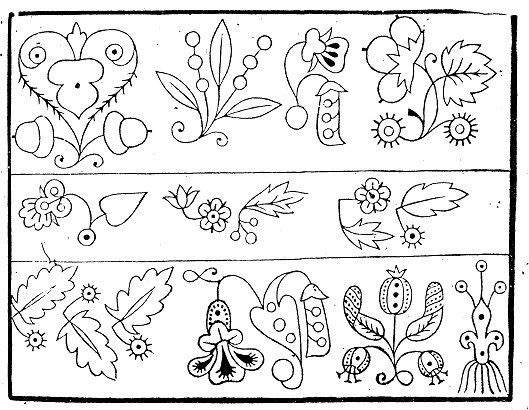
From A Scholehouse for the Needle, individual pages reproduced on Pinterest

An extant coif c. 1590 held in the V&A Museum, London
Available on Pinterest and at http://collections.vam.ac.uk/item/O364617/womens-coif-unknown/


Embroidered panel c. 1600 available at Pinterest and held by the V&A Museum

Coif decorated with currants or holly held by the Embroiderer's Guild London and reproduced in Elizabethan Stitches by Jacqui Carey ISBN 978-0-9523225-8-0, p. 84

Design from 'Ein New Kunstlich Modelbuch' by Peter Quentel c.1544, page 13r
Available at The Metropolitan Museum https://www.metmuseum.org/
Tuesday, January 28, 2020
Embroidered Collar and Cuffs with Pony Detail for a Knighting Gift
Last year I was honoured to attend the elevation of a friend to the Chivalry. I wanted to make a small gift as a memento of the occasion. I decided that embroidered collar and cuff panels for a shirt would be appropriate.

 I traced the design onto my base fabric using a window as a light source and a Frixion marker.


 The finished piece. I left it in a single panel so that the pieces cannot be lost until it is made up into a garment, and because people make shirts slightly differently and I wanted to allow plenty of fabric for turning under. (Base fabric is zigzag stitched on the edges for durability until it is cut into panels.)


I based my design on a band from the Trevelyon Miscellany(1608); a modelbuch for artists which has a breathtaking array of designs just crying out to be embroidered. I copied the design, and simplified it as well as adding in pony's heads - an element of the recipient's heraldry. I traced the design out onto tracing paper. I photocopied the design and reduced it in size so that the same basic design was used for collar and cuffs (but smaller in size on the cuffs). I then modified the design slightly so that it would fit into the size panel required to go around the wrist.


The base fabric is linen and the embroidery worked in Guterman silk in split stitch.

Sometimes you just need to take a break and rest the eyes and re-energise!


The project was a little challenging as I was on a strict time deadline and I was still having issues with my wrist and hand from the injury in Nov 2018 and my underlying health problems. My stitching is not as fine or as accurate as I would like, which is disappointing. It also took at least twice as long as my usual slow pace.

I love designing embroideries, but I think my favourite moment is when the marker is ironed away and the stitches remain.


Trevelyon's Miscellany can be found here: https://folgerpedia.folger.edu/Word_%26_Image:_The_Trevelyon_Miscellany_of_1608
I also can't recommend Modelbuch Muse enough - it is a wonderful information base relating to Renaissance dress as well as lovely embroidery designs to try: https://www.facebook.com/modelbuchmuse/
Portrait photo credits: S.J. Taylor - many thanks!
Monday, January 20, 2020
Award Cords Completed and Sent
My first lot of award cords are finished and have been delivered. I enjoyed experimenting with different braiding styles and I will continue to work on these when I have time as I imagine that the Crown and Barons and Baronesses always require award cords.


Friday, January 17, 2020
A time of reflection...
I hope that you all had a happy and productive festive season and (hopefully) a nice break. Here in Australia, December is the end of the school and college/university year, and many businesses close over Christmas to give their employees annual leave. It can be a strange time of year if you get to enjoy the break. It also tends to be a reflective time for me; time to think about the year that has passed and to start making plans for the new one.
This particular Christmas break has been less festive than usual due to the terrible bushfires ravaging many parts of Australia. I am lucky to have only been impacted by mild smoke and this time didn't even have to pack the car in preparation to evacuate. However, many friends have lost homes and belongings. As a former wildlife carer, the knowledge of what the wildlife has suffered and the impact on ecosystems is just devastating, and events have certainly impacted the mood of most people that I know.
I have been surprisingly unproductive over the break, even for me! Last year was horrible for me in relation to my health, and my responsibilities and obligations have been weighing heavily on me of late (as well as current affairs). I did a lot of planning and researching, but not much actual sewing or crafting. It was actually good to take a break.
As usual, I have an almost never-ending list of projects that I want to start, or things that are waiting to be finished. I am prioritising things for other people, and I am very aware that there are a lot of projects waiting to be blogged.
I got some lovely Christmas gifts, which made me feel very spoiled. I collect acrylic and enamel brooches and pins, and I got some of those. I also got some books and fabric, so I was very very happy. (Honestly, just being safe and enjoying good food and friends and family would have been enough, given what so many Aussies are going through at the moment.)
I got this book for Christmas, and I am looking forward to continuing my cord making experiments during the year.

This particular Christmas break has been less festive than usual due to the terrible bushfires ravaging many parts of Australia. I am lucky to have only been impacted by mild smoke and this time didn't even have to pack the car in preparation to evacuate. However, many friends have lost homes and belongings. As a former wildlife carer, the knowledge of what the wildlife has suffered and the impact on ecosystems is just devastating, and events have certainly impacted the mood of most people that I know.
I have been surprisingly unproductive over the break, even for me! Last year was horrible for me in relation to my health, and my responsibilities and obligations have been weighing heavily on me of late (as well as current affairs). I did a lot of planning and researching, but not much actual sewing or crafting. It was actually good to take a break.
As usual, I have an almost never-ending list of projects that I want to start, or things that are waiting to be finished. I am prioritising things for other people, and I am very aware that there are a lot of projects waiting to be blogged.
I got some lovely Christmas gifts, which made me feel very spoiled. I collect acrylic and enamel brooches and pins, and I got some of those. I also got some books and fabric, so I was very very happy. (Honestly, just being safe and enjoying good food and friends and family would have been enough, given what so many Aussies are going through at the moment.)
I got this book for Christmas, and I am looking forward to continuing my cord making experiments during the year.

Wednesday, January 1, 2020
Happy New Year!
Wishing you all a happy and healthy year in 2020. May all your projects be speedily and satisfactorily completed!

Wednesday, December 25, 2019


Monday, December 9, 2019
Award Cord Project
Paperwork and admin has been keeping me busy lately. I haven't had much time, but I have been able to be able to continue working on the award cord project. The ones below are simple three strand braids. It is a simple technique but effective. The tension is quite tight, which results in a firm braid, and the result is nice.


Sunday, December 1, 2019
Embroidery Designs
I've been unwell again of late and so haven't been as productive as I would have liked. One thing that I have enjoyed though, is doing some blackwork designs. I really enjoy the design process, and love looking at portraits and extant pieces and drawing up designs based on what I have seen. I recently drew up a coif design (that I absolutely adore!) for a friend, as well as a couple of partlet designs and some Elizabethan coif designs. I find it very soothing. (Tracing the design out - not so much! But a gift of a lightboard has made that part of the process a bit smoother too.)


Monday, November 18, 2019
A Woolen Tunic with Short Sleeves
Back in June when I made the long sleeve woolen tunic for a friend, I also made a short-sleeved one. The wool was lovely to work with; no fraying and beautiful to hand sew. I used the same 'pattern' as the previous tunic - basically just rectangles, squares and triangles. The main body is two rectangles. The sleeves are four rectangles. There is an underarm gusset which is a square, and triangles of fabric are added into the 'skirt' to add fullness.
 I don't know the artist of this particular pattern but it is a good indicator of how the layout of my tunic looked. I didn't use a faced neckline because the wool was quite bulky, but the rest of the layout is very similar. I measured the wearer's body and added a little extra for ease of movement plus seam allowances.
 I sewed the long seams by machine.
 Once the seams were sewn, I whipped the seams open and down.
 I added a supportive placket around the collar split so that the pressure of normal wearing wouldn't end up ripping the split at the front.


 I don't know the artist of this particular pattern but it is a good indicator of how the layout of my tunic looked. I didn't use a faced neckline because the wool was quite bulky, but the rest of the layout is very similar. I measured the wearer's body and added a little extra for ease of movement plus seam allowances.


The rest of the neckline was turned down with a small hand-sewn hem to reduce bulk.
I left this tunic plain so that the recipient could sew trim on if he wanted. I have yet to get a photo of him wearing it, but it looks nice on.
Subscribe to:
Posts (Atom)