Showing posts with label chemise. Show all posts

Wednesday, June 9, 2021

Embroidered Camicia Sleeves

I recently completed the sleeve panels for a new chemise. The motifs are worked mainly in stem stitch with  some double running stitch for some of the internal details.

The inspiration page from Shorleyker's 'A Sholehouse for the Needle'

The panels with the designs marked out in Frixion marker.

The completed sleeve panels.

I'm currently adding a motif to the front and back panels, and then will do the sleeve gussets.
Then I plan to hem each panel by hand and assemble them with a decorative faggoting stitch.


Wednesday, August 8, 2018

Camicia Embroidered with Bird Designs

One of the projects I chose to undertake as part of my local A&S Pentathlon challenge is a linen camicia embroidered with birds and flowers. I have worked out a design taken from period sources and cut out my pieces. I am using DMC cotton floss in (predominantly) split stitch for the designs.


Although I am keen to get this project done as I really need a heavier camicia for cooler weather, it is a very large undertaking. I will be disappointed but not surprised if I don't get it finished by early 2019. Hopefully as the weather warms up I will get mobility in my fingers and be able to sew faster!


Friday, January 5, 2018

A Cotton Voile Camicia for Hot Weather

I have a lot of mobility and other health issues which can make dressing in late-period attire harder than it has to be. Putting on gowns with attached or pre-tied sleeves can be a real drama for me, especially if my camicia is particularly full. Recently, I had a challenging event coming up, and I had lent a friend my narrow sleeve camicia, so I was in a bit of a bind.

I raided my stash for some very fine voile (it was going to be hot, and heat tends to affect me very badly. Wise heads out there are probably wondering at this point why I haven't changed my persona to early period Roman.....) Luckily, I had some voile, and I cut it into the usual rectangles and triangles patterns  which I have explored earlier on the blog.

Image result for broider me bethan + chemise
The rough chemise pattern that I follow

Image from: http://www.festiveattyre.com/p/how-to-make-easy-italian-chemise .html


This cutting technique is accurate for many garments over hundreds of years (with some variations on size of pieces and gathering and finishing techniques.) It probably remained popular because it is simple and wastes almost no fabric, which would be ideal when fabric was hugely expensive and/or laboriously handwoven.

Because my hands are bad at the moment, I machine sewed the majority of the seams, leaving small gaps where the gores meet that I could neatly hand finish. This was to make sure the edges met up properly and the stitching was neat. I would have liked to turn all the seam edges under and whip them down for durability, but I did not have enough time, so that will be an ongoing project. I used selvages as edges where I could, and used a zigzag machine stitch on any raw edges for strength in the mean-time. Of course, in the sixteenth century, a fine linen such as handkerchief weight linen would probably have been used for this type of undergarment, but budget and availability make that option impossible for me at the moment, so cotton has to do.

I put some gathering stitches in around the neckline (basically just long running stitches done with durable thread) and gathered the neckline up, trying it on to adjust the width. At this point I measured the length band I thought I would need to keep the neckline at the desired width. I planned to use bias tape to finish the neck edge.

Once I started working on the neck edge, I realised that I didn't have enough wide bias tape (called 'hem bias tape' here). I didn't have time to make my own and wasn't well enough to go out and buy a packet, so I made do with what I had. I had the remnants of an old cotton quilt cover that I bought from a thrift store and used to make a nice soft round necked smock early in 2017. I cut a long strip four times the width that I needed. I ironed it in half and then tucked the raw edges up into the centre fold and ironed again. This gave me a nice soft but firm band.

I also decided that I didn't like the way the gathers looked, so I pulled them out and changed to small pleats. I divided the neckline edge into four even sections and then just pinned and adjusted the pleats by eye so that the neckline looked (reasonably!) even, and was the desired size.

Next I sewed the front edge of the neckband on with tiny whip stitches. Once the band was on (and I had tried it on to make sure the size was correct,) I ran a line of green embroidery floss along the edge in running stitch.) No-one will see the edge, but I liked the look of the tiny bit of decoration. It also makes it easier to find the correct camicia or smock when you are looking through a pile of underpinnings. I left the sleeve edges undecorated because the fabric is very fine and the stitches and knots would show through if I rolled up my sleeves.

Once the decoration was done, I finished of the reverse side of the neck edge, whipping it down with tiny hand stitches again and being careful not to let them show through on the front edge.

I found that when I wore the camicia, the neckband feel forward a little. This is due to the band not being cut on the bias and the two differing weights of fabrics. It is still wearable, and doesn't do it quite as much once I have a pair or bodies/stays on over the top. Next time I would probably but some little tucks on the inside of the band to hold it in more if the band was not cut on the bias.

Over the next weeks (realistically, probably months), I will continue sewing down the seams on the inside for durability. I have worn it twice in hot weather and I am glad I went to the trouble of trying the voile. I will certainly make more in this fabric. They probably won't last for years because it is a delicate fabric, but it is worth the time for a bit of heat relief. Heat relief is a prime concern at this time of year - where I am is predicted to hit 43 degrees Celsius tomorrow.


Wednesday, November 15, 2017

Chemise gussets

I haven't been well lately, so haven't got much finished.
I need a narrow sleeved chemise for an event that is coming up and have been plodding along working on one for a few days. It is cut from a very fine cotton voile. I must have made fifteen to twenty chemises in my time in the SCA, but putting the armpit gores in always confuses me. 'Brain fog' is a side effect of my illness, and it was in full effect today. I just couldn't seem to get my head around those gussets. Sometimes coffee and chocolate is the answer to the problem!

Tuesday, May 30, 2017

Cotton Chemise- A&S Century Challenge

I spent my time today sewing some ribbon onto the sleeves of a cotton chemise. I couldn't do much as my hands are very painful at the moment.

Monday, May 1, 2017

A&S 100 Challenge - Day 3 (Flat felling seams on body linens)

Flat felling seams today. My hands are protesting yesterday's fingerloop braiding experiment, so I'm keeping it simple!

This is one out of a pile of chemises/smocks waiting to be hemmed and made up.

Tuesday, November 1, 2016

Chemise Adjustments

Last year I made a cotton chemise for the IRCC5. I made it in a bit of a hurry to meet the competition deadline, and planned to add cuffs later. Since then I have worn the chemise quite a bit and never got around to adding the cuffs. I realised that I like the big flowing sleeves for certain events, especially outdoor events when it is hot. After wearing it on the weekend, I decided to add lace on the sleeves. I also took a bit off the bottom because it has no gores and the hem was restricting my walking just a teeny bit. It is now about knee-length. Not quite a mini-dress, but a bit of a shock to the system, when you are used to your chemise being calf or ankle length!


The sleeves prior to adding the lace. The hem is hand sewn.

After the (machine made) cotton bobbin lace has been added. 


The chemise with lace added to the sleeves and the hem shortened.

Monday, February 15, 2016

Cutting linen for new chemise project

I have recently started a new project: to make a chemise for a friend. I am not sure if I have shared this before, but I know a great trick to make cutting linen evenly very easy.

Measure up your panels, and then carefully lift a thread at your cutting line. Cut the thread and pull it to create an even cutting line. The thread may break before you can pull the whole lot up; just find the broken end and keep pulling.


When you have finished pulling the thread out, you will have a perfectly even cutting line in your linen to follow!

This chemise will be entirely hand sewn. I am making it out of rectangles and squares. The underarm gussets are small squares, and the body panels and arm panels are large rectangles. The neckline and wrist holes will be gathered into embroidered bands.

Baroness Linet atte Falcon's Nest has kindly offered to help me by hand hemming the body panels. I have hemmed the gussets.

The hem is just the edge turned over twice and stitched down with tiny stitches. I aim to join the pieces together with a decorative insertion stitch. The neck and wrist holes will be gathered into the embroidered bands (once the bands are complete!)


Thursday, December 17, 2015

Noble Pilgrimage - 2


I have been thinking hard about what I would like to achieve as part of my Noble Pilgrimage journey. The list seems to be getting longer and longer, so I have to be realistic! One aspect would be some new garb. I definitely need a new tourney dress, and a new court dress would be a good idea too.
I marked out a new chemise this week. I want to hand sew it, and I am not sure I will realistically be able to get that finished with all the other existing responsibilities and new challenges, but I hope so! Pictures soon!


Image source: http://www.gettyimages.com.au/detail/news-photo/german-woodcut-of-pilgrims-in-europe-dated-15th-century-news-photo/566451825

Saturday, April 4, 2015

Making an Italian Chemise

As part of the Italian Renaissance Costuming Challenge 5, I decided to make an Italian chemise (plus, I need some new ones.) I have always been hesitant to make chemises the 'period' way because I am terrible with underarm gussets and find them difficult to get my head around. I have been to a chemise making workshop before, but never actually constructed one. Previously I have used a commercial pattern with a scoop neck and inset sleeves for chemises like the type pictured below.


Image from: www.pinterest.com

Extant chemises suggest that piecing together of square and rectangular panels was a popular method of construction. This makes sense, given that it is an economical way of using valuable fabric, and makes good use of the fabric selvages.
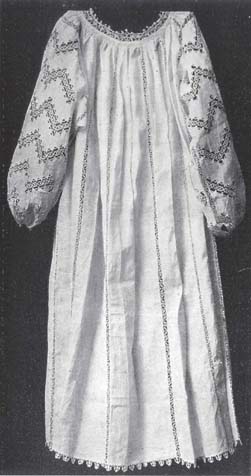
Chemise linen Italian chemise with a reticella, middle 16th century, Old Italian Lace; Ricci.
Mid-Sixteenth Century Chemise
Image from: http://www.kostym.cz/Anglicky/1_Originaly/02_Renesancni/I_02_07.htm


Linen smock with silk and metal thread embroidery. Italian, late 16th century. Held at the Metropolitan Museum of Art. #embroidery, #smock, #renaissance.
Late Sixteenth Century Italian Chemise
Image from: https://www.pinterest.com/pin/353251164495637334/


Woman's chemise. Italy, century. XVI, second half n.inv. 76.01.16. Museo del Tessuto
Italian Chemise from the second half of the Sixteenth Century
Image from: https://www.pinterest.com/pin/353251164495637214/


I raided my stash and found several pieces of cotton that I could use to make the chemise. The front and back pieces were large rectangles, and the two sleeve pieces were smaller rectangles.
To try and make the gussets easier, I made the underarm square larger and then cut it in the middle to make two triangles. This worked quite well but made an extra seam under the arm. I used a zigzag stitch to edge all the raw panels first to reduce fraying.The side seams on the body pieces were on the selvage anyway, so didn't need edging.
The underarm gusset


I sewed the panels together in this way:
Image fromhttp://www.festiveattyre.com/p/how-to-make-easy-italian-chemise.html
although I did make the back neckline higher than the front because I am terribly prone to sun damage due to my medication.

 I was hoping that I could finish the seams inside so that it would all be neat and tidy. Unfortunately, that was harder than it sounded. It is not too bad, but I think next time I would finish the edges on all the panels by hand and then whip stitch them together or use an ornamental joining stitch like a faggoting stitch.


I needed to take a little off the bottom to even up the bottom hemline, because I changed the height of the back panel to make it sit higher on my neck. I need to factor that in when I cut the panels for the next chemise.
My furry assistant always 'helps'when I am cutting out fabric


Once the panels were sewn together and tidied up, I ran a running stitch of about 5mm around the neckline to gather it up. I put ties at the front and back for ease of adjustment.

 I tried the chemise on and got someone to help me adjust the ties to get the neckline to sit where I wanted it.


Then I began the process of sewing the gathers into place with bias binding.


I went around and sewed the front of the binding down by hand, then went back and did the back (inside).

Even though I just used a cheap commercial bias binding, I was very pleased with how the neckline turned out.

I planned to make gathered sleeves for this chemise, as I always do. But when I tried the chemise on during the fitting of the neckline, I really liked the way the sleeves looked ungathered. I recently acquired a hemming foot for my sewing machine too, so I decided to play around with it.


It produced a really nice even hem, but it was a little lumpy at the join in the sleeve. I obviously need a lot more practice with it. In the end, I decided to sew the sleeve hem down by hand. 


I was disappointed to find that the fabric had a couple of little holes in it. They looked quite a lot like pinholes. Luckily one lot was on the back panel and the other was low down on the front where no-one would see them.


I darned the holes with sewing thread. If I could do it over, I would use embroidery thread.


I am extremely happy with the result of my first attempt. This style of chemise is much more comfortable than the commercial pattern styles that I have used in the past. It sits better and there is less pulling under the arms when wearing a corset. I will make this style of chemise again, and at some stage I would like to experiment with an Elizabethan style smock and a fully hand sewn Italian chemise.


The finished chemise. Please ignore the bra, jeans and sneakers; I wasn't sure how transparent the cotton would be in the sun!


Monday, May 28, 2012

Tidying Up


Since I have been sick I have really just been setting myself little tasks to work on. One was to go through a pile of fabric and miscellaneous articles that have been waiting to be dealt with for more years than I would like to admit! And what did I find? Three chemises and two partlets, all at the 'mostly finished' stage! I am so glad that I got on and did that chore now!

An embroidered partlet waiting to be hemmed and have a ruffle added


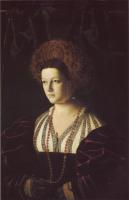
This partlet was originally inspired by the following portraits:

Paolo Cavazzola's 'Portrait of a Lady' from nga.gov.au 


Ritratto di Gentildonna by Bartolomeo Veneto at oilpaintingonline.com 


File:Veneto, Bartolomeo - Portrait of a Lady in a Green Dress - 1530.jpg
Bartolomeo Veneto's 'Portrait of a Lady in a Green Dress' - 1530 from commons.wikimedia.org 

Thursday, February 23, 2012

Blue Scholehouse chemise panels

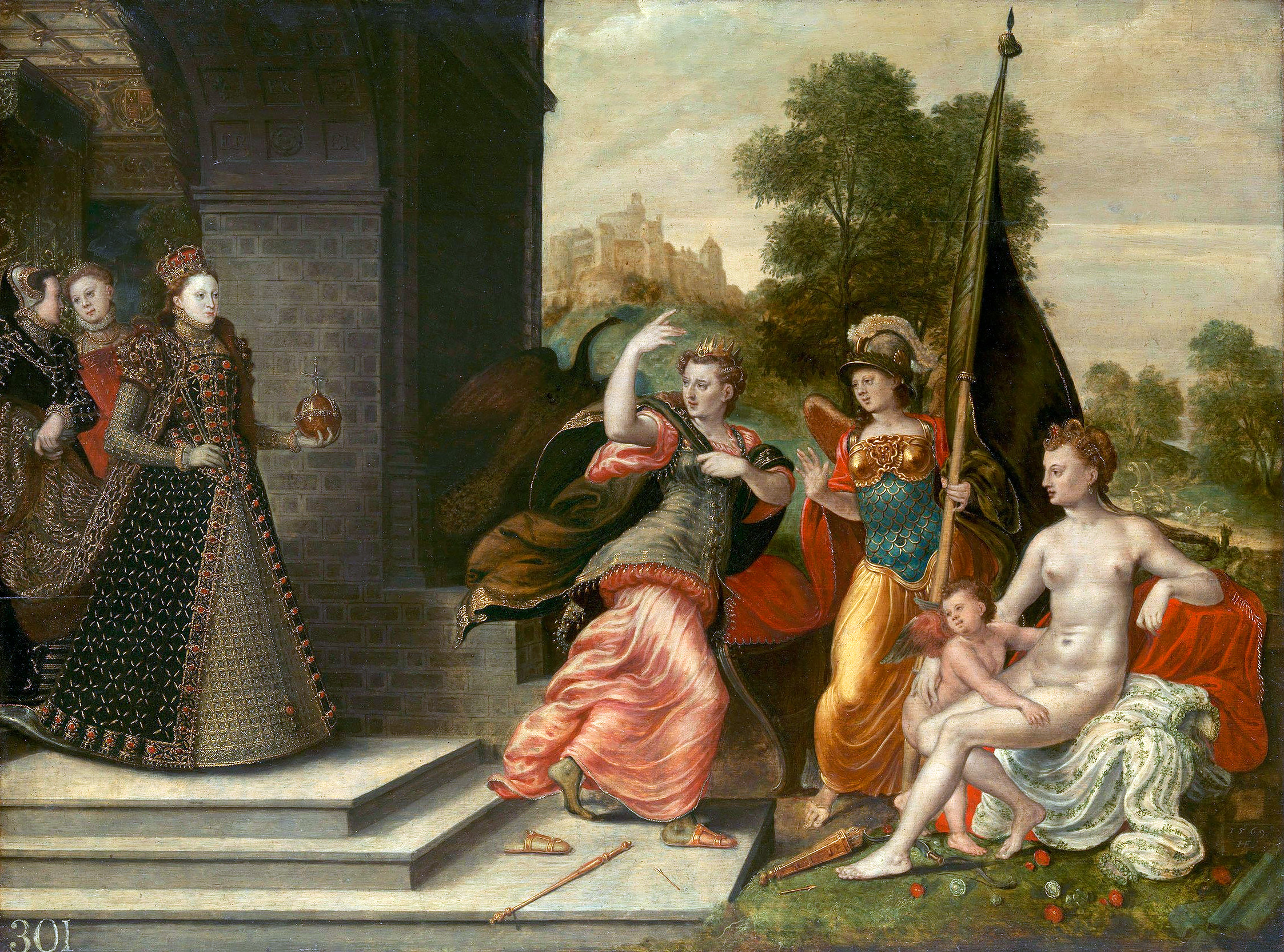
Today's post relates to one of my earlier chemise projects. I saw the image (below) of the goddess with an embroidered chemise, and decided that I wanted one.

Queen Elizabeth I with Three Goddesses by Hans Eworth -http://www.luminarium.org/renlit/elizagoddesses.jpg
I decided upon a motif from Shorleyker's 1632 Pattern book 'A Scholehouse for the Needle' -

Image can be found at feelingstitchy.com


The motifs were embroidered in stem stitch in a blue DMC cotton floss. In the image below, the fabric is draped over my ironing board, which makes the ground fabric look slightly checked. It actually isn't checked; the ironing board cover is showing through the fabric.


Although both sleeve panels are complete, I never made this chemise up because the ground fabric seems to be a poly-cotton blend. I find that poly-cotton doesn't wear well, doesn't last as long as natural fabrics, and is a bit of a fire risk with candles and other flames. When I started this project, I was on a ridiculously tight budget. Now, although I am still on a tight budget, I will pay the extra for natural fibre fabrics. I have learnt the hard way that it is false economy not to.


Monday, January 16, 2012

Grey flower motif chemise

I finished this chemise a few years ago. It is made of light cotton gathered into a bias binding neckline. The sleeves are decorated with flower designs inspired 'A Scholehouse for the Needle' and by the Warwick shirt.  'A Scholehouse' was a pattern book drawn by Richard Shorleyker (1632.) It contains many designs that exist in pattern books printed at various times in the sixteenth century. The Warwick shirt is an extant example of Elizabethan monochrome embroidery* (done in red). It It has some beautiful designs on it, and can be seen here:
http://www.warwickshire.gov.uk/web/corporate/pages.nsf/links/aa47f702d5996adc80257149002da95e


The shirt is part of the collection of the Warwickshire Museum: 
http://www.warwickshire.gov.uk/museum


You can see a very interesting article, including some designs from the shirt, here:
http://knol.google.com/k/elizabethan-blackwork-embroidery#

The sleeves on my chemise are very big and are designed to be puffy enough to allow them to be pulled out through slits in split sleeves. When worn without an oversleeve, they flow over my hands:


As with most of my clothes, the chemise is used for both Italian styles and under my Elizabethan loose gowns. The designs are worked in grey DMC cotton in a range of stitches, including buttonhole stitch, seeding stitch, stem stitch and double running stitch. All visible seams were handsewn, except for the hem.

The sleeve laid out before sewing (the white tiles underneath are showing through the thin fabric.)


* also called as 'linear blackwork' or 'single-colour, non-counted blackwork'